
Vision & robotics · OEM & specialist machinery

Braze detection & rejection system

A stand-alone inspection cell that verifies a safety-critical braze and automatically separates non-conforming components.

ClientHydraForceSectorOEM & specialist machineryPrimary disciplineVision & robotics
01

The challenge

What needed to change.

Hydraulic valve components needed consistent verification of a complete braze before entering service at pressures above 3,000 PSI. The product family included around 80 component variants and required minimal operator intervention.

02

Adbro’s approach

How the solution was engineered.

Adbro combined controlled lighting, machine vision, part handling and automated rejection in a self-contained cell. Product recipes and clear operator guidance make changeovers practical across the component range.

03

The outcome

What the project delivered.

The system delivers repeatable inspection, automatic segregation of failed parts and a clearer quality record, removing reliance on subjective manual checks.

Technical delivery

Inside the engineered solution.

The detail below shows how the main equipment, software and interfaces were brought together—not just what the project achieved.

80component variants managed by recipes800+parts inspected per hour360°braze inspection around each component2automated inspection cells delivered

System scope

  • Epson T6 SCARA robot and pallet handling
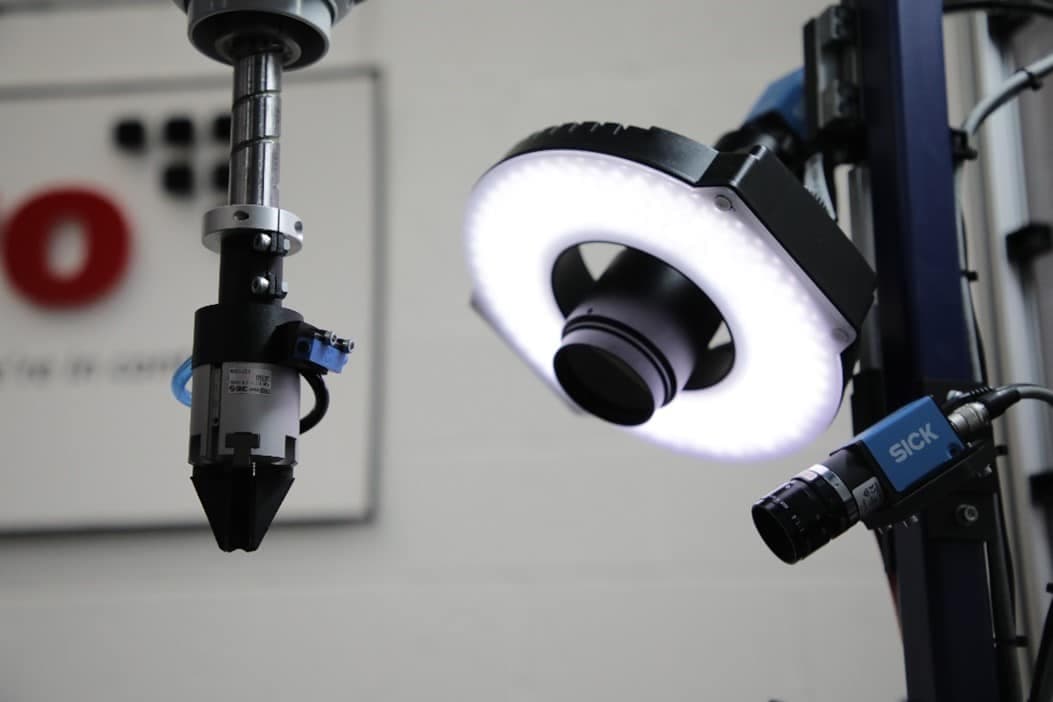
  • Dual SICK 2D vision cameras with controlled lighting
  • Adjustable inspection position for varied component sizes
  • HMI recipe selection and part-type changeover
  • Pass marking, reject segregation and final mark verification
  • Photoelectric collision and tolerance monitoring
01

Repeatable presentation

The robot removes each component from its pallet and presents it to the inspection station. The part is rotated through 360 degrees, with images captured at 60-degree increments to inspect the full braze path.

02

Top, bottom and assembly checks

Two cameras inspect the upper and lower braze regions, while the inspection also checks the central tube for the engraved ring that identifies an incorrect assembly. The upper camera position adjusts for different part sizes.

03

Controlled disposition

Passing parts move to a stamper and are checked again to confirm the mark is present. Parts with a missing or incomplete braze, an assembly issue or a failed stamp check follow a controlled reject sequence.

04

Recipe-led operation

The HMI stores product-specific inspection and handling settings for the component family, reducing operator input while keeping changeover and fault guidance visible.

Verification & handover

Both cells were factory tested at Adbro before installation. Commissioning confirmed the inspection, marking, rejection, recipe and safety sequences against representative production components, reducing the work required on the customer’s live site.

Project highlights

Vision inspectionAutomated handlingRecipe controlQuality traceability

Start a conversation

Could we engineer a similar outcome for you?

Bring us the challenge. We’ll help you shape a practical next step.

View our work